26 May 2026 · Çetintaş Kahve Ekipmanları · 4 min min read
Automation Systems and Product Flow in Modern Coffee Roasting Plants
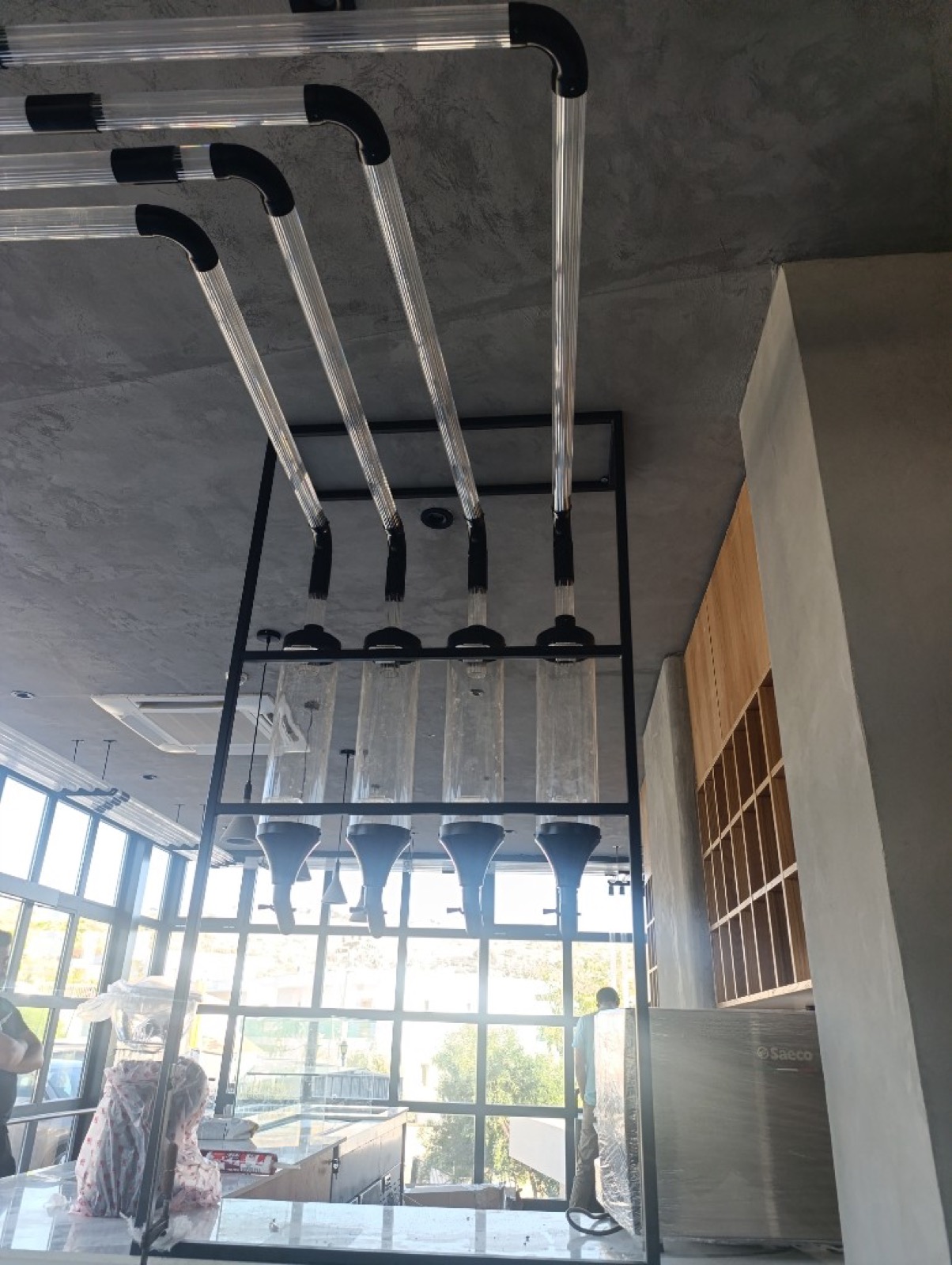
As industrial coffee volume grows, standardizing quality and minimizing operational error become unavoidable engineering requirements. Modern coffee roasting plants are not rows of independent machines — they are automation centres where the journey from raw intake to packed product is managed by integrated systems.
Moving from manual production to semi-automatic and modular systems directly shapes speed, labour efficiency, and profitability. This article examines the operational journey of beans in a scaling roastery, modular equipment design, and the pneumatic transport technologies that sit at the centre of line flow — from an industry perspective.
Modern Roastery Design: From Manual to Automation
In traditional layouts, stations are linked by people. Operators spend serious physical effort weighing green beans into the roaster and moving roasted coffee to resting areas. As monthly tonnage rises, manual transfer becomes a bottleneck.
The core principle of modern plant design is to lift the operator from “carrier” to “quality controller.” The shift to semi-automatic systems starts when coffee roasting machines, storage units, and transfer lines share one digital synchronization. That change not only adds speed — it guarantees the same standard product every shift.
The Bean’s Journey Through the Plant
In an automated plant, each process must follow the next without gaps or errors. The physical journey of the bean includes these stations:
Green Bean Storage and Feed
The first step of the line. Green sacks are opened into feed hoppers — after that, hand intervention ends. The recipe batch of green beans, pre-weighed, is commanded into the roaster inlet hopper.
Roasting and Cooling
Beans in the hopper roast under digital profile software (PLC screens or roast apps). When the roast ends, the drum opens into the cooling tray. Fast, even cooling stops the internal heat reaction and protects the target cup profile.
Transfer and Siloing (Resting)
Cooled beans that pass the destoner must move to resting stations — silos — for degassing. To keep varieties separate, the system routes coffee to the correct coffee silo valves for each group.
Packing Line
After resting, silo bottom valves open and coffee moves by gravity or screws into automatic weighers and packers for the end consumer.
The Role of Pneumatic Transport in Automation
The physical bridge for that journey is pneumatic (air) transport. Bucket elevators and belts in older plants take space, fail often, and are hard to clean.
Pneumatic coffee transport works like a roastery’s nervous system. Beans move unbroken through closed stainless or alloy pipes on correctly calculated airflow (pressure or vacuum). From the automation panel, Ethiopia from machine A goes to silo 1 while Brazil from machine B goes safely to silo 2 at the same time. Closed-loop operation stops dusting and delivers high hygiene.
Operational Value as the Business Grows
B2B producers that equip lines with technology typically see these cost-base improvements:
- Labour optimization: Physical carrying ends, so staff time shifts to R&D, profile development, and quality management.
- Traceability and loss control: In semi- or fully automatic systems, raw losses approach zero. Spillage and transit damage disappear.
- Zero cross-contamination risk: Components and pipes include purging so leftovers from prior batches do not remain.
Modular Design and Integration into Existing Lines
A well-planned roastery must not be trapped at day-one capacity. Rising demand makes adding machines inevitable — which is why modular system design matters.
Integrating new equipment into an existing line is smooth when the infrastructure was modular from the start. Çetintaş Coffee Equipment’s project approach prices future growth into the first design. A T-valve on an existing line can add a new silo group or a second roaster to your automation network without physical demolition.
Frequently Asked Questions
Read Full Article
Integrating roaster, silos, and pneumatic line as one system — level sensors, flange match, and cross-contamination control.
Food safety, oil build-up, and periodic maintenance on clear pneumatic coffee lines — a hygiene protocol for roasteries and cafés.
What are the storage standards for green and roasted coffee beans? Why coffee silos protect freshness and speed operations in commercial venues.